
Bittersweet Agony
Bittersweet Agony

Bittersweet Agony
If an Orangutan could speak to us. Maybe he would begin with a “Dear human…”, maybe. But let us not rush too much and start from the beginning of the Story.
The Borneo is an inhospitable place for most, extremely high temperatures, unbearable humidity, months of neverending rains followed by scorching heat, a towering, intricate forest stretching as far as the eye can see, alternating with waterways inhabited by Saltwater Crocodiles, False Gharials, endemic Bornean Crocodiles, swamps, mud, and occasional human settlements. Deadly Snakes, huge Spiders, sticky Leeches are present in great numbers and can often be dangerous, if not transmit serious diseases, like Mosquitoes. Endless nights fighting with torn mosquito nets, heat, insects, a place that, like all forests, seems been programmed to kill. Scary, right?
It sounds like the Antechamber of Hell. And yet it’s a Paradise, and it’s their Home, the home of thousands of animal species, containing around 1.800 terrestrial vertebrates, among which more than 700 endemic species, and tens of thousands of invertebrate species. But we are destroying this Home, with the systematic, indifferent and apathetic greed to have, take, use and destroy, simply because we can do it, because we tell ourselves that it’s “useful”, “necessary”, that it’s “right”.
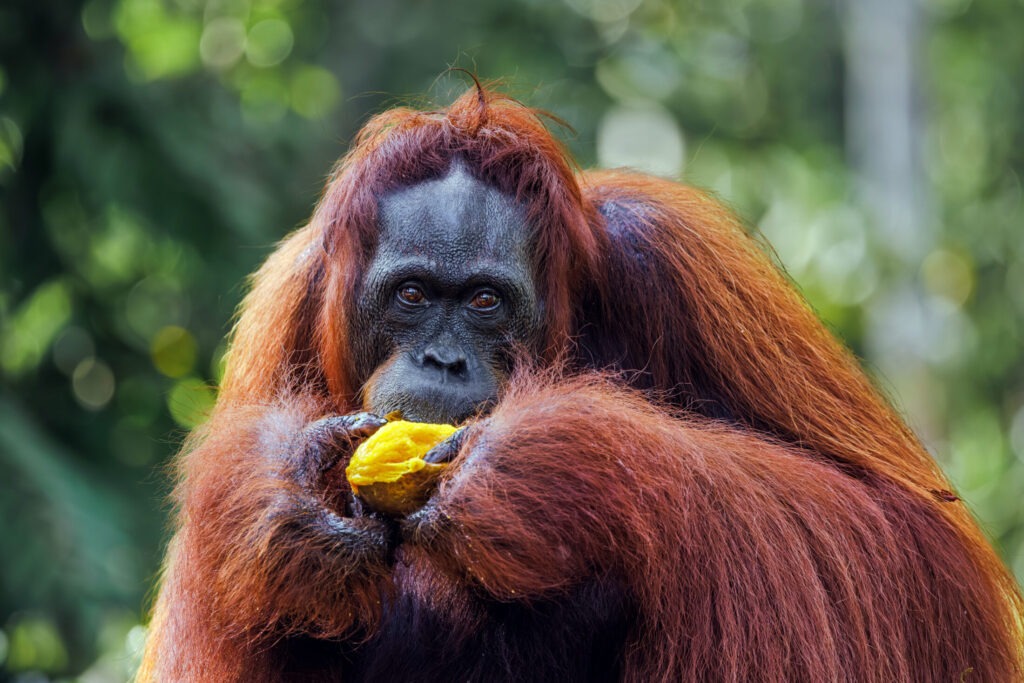
Nice to Meet You, Mr.Pongo
But we said not to rush too much; on the contrary, let us go back, climb aboard the usual “Time Machine” and return to about 20 million years ago, when the story begins. The Bornean Orangutans (Pongo Pygmaeus) are the last surviving branch of a lineage of Great Apes that once flourished across much of Eurasia.
Now, without closing your eyes, imagine finding yourself in a Primordial Forest, between 18 and 20 million years ago. You are in the “Early Miocene”, more or less in present-day Africa, surrounded by numerous species of Primitive Anthropoids (calling them “apes” is still a bit premature). You begin exploring in search of “answers”, but another couple of million years will have to pass before finding them. It was then that what is defined as the “Ancestral Great Ape” appeared, in short: “Mommy”, the progenitor of all of us.
At the time the climate was warmer and vast forests covered Africa, the Middle East and Eurasia. The first Anthropoid Apes, dispersing in search of new territories, spread from Africa toward actual Asia and Europe. And it’s during that period that the first great divergence of the evolutionary lines occurs. On an apparently anonymous day, identical to all the millions of days before it, between 16 and 12 million years ago, the evolutionary line split into two branches: on one side the Ponginae (which would become the three families of modern Orangutans: Bornean, Sumatran and Tapanuli), and on the other the Homininae. An ordinary day that changed everything, or almost everything.
A few more million years would have to pass before the line of the African Common Ancestor split up once again into two branches, leaving the Gorillas on one side (which would lead to the evolution of the modern Eastern Gorilla and Western Gorilla) and the Hominini on the other. But one final, true, great evolutionary divergence would still be necessary. Roughly 6–7 million years ago, which would lead the line of the last “Human-Chimpanzee Common Ancestor” to separate, creating two new lines: the Pan lineage, from which Chimpanzees and Bonobos would arise, and the Homo lineage, whose outcome I don’t think needs to be specified.
But let us go back once again, to after the separation of the Ponginae group, to what is called the Era of the Pongines, when the ancestors of modern Orangutans flourished in what is now Asia for millions and millions of years, in the places we now call Pakistan, India, Nepal (even in some Himalayan sites), Thailand, Myanmar, Vietnam, Laos, Cambodia, part of southern China, Malaysia, Indonesia, and who knows how many other areas of Southeast Asia. Tens of millions of years, among paleo-ancestors, common ancestors and the current lineage. Tens of millions.
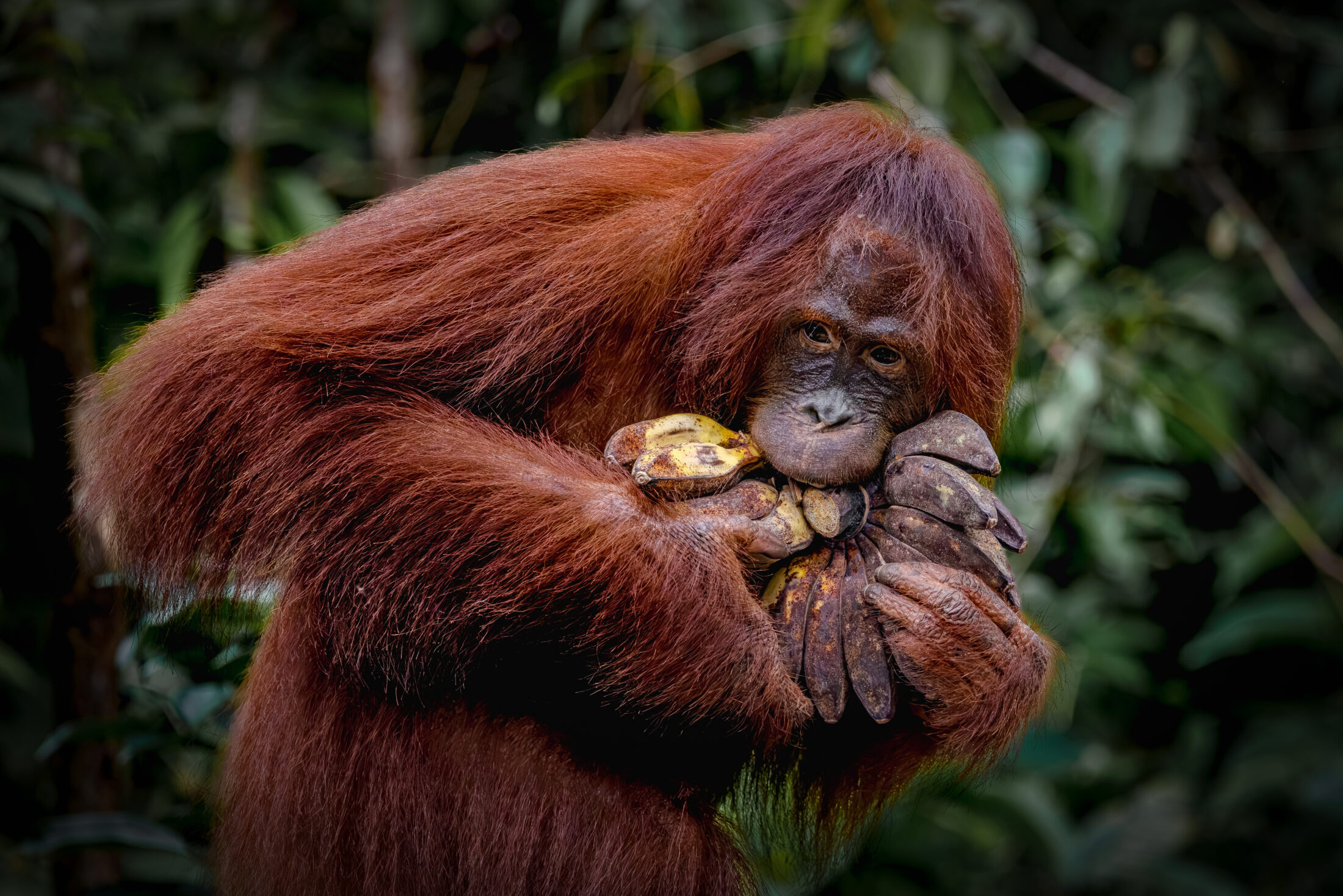
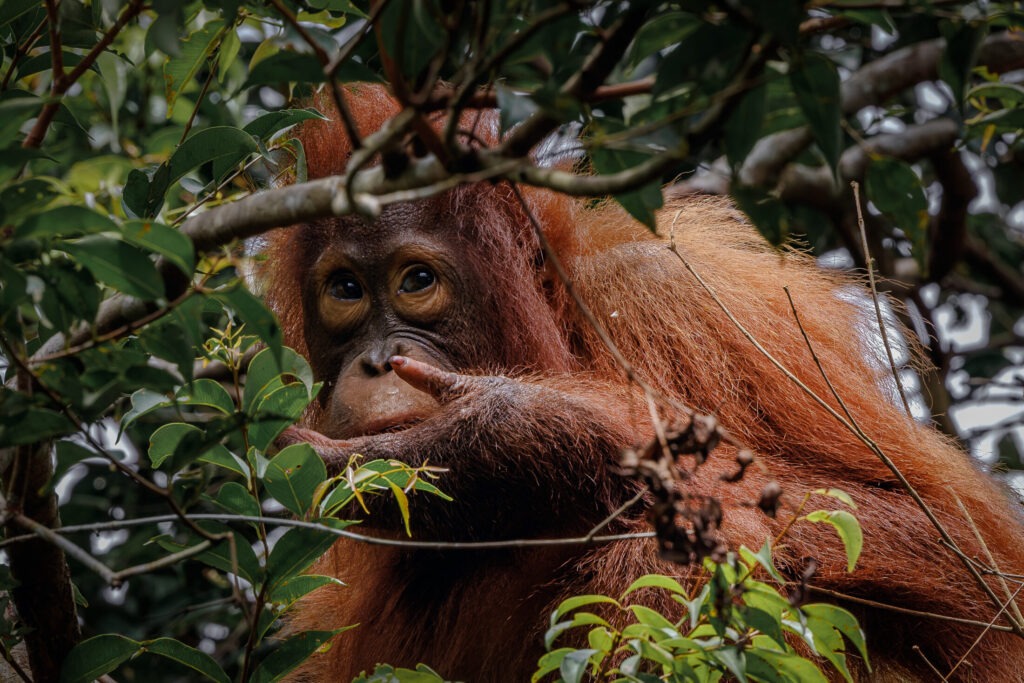
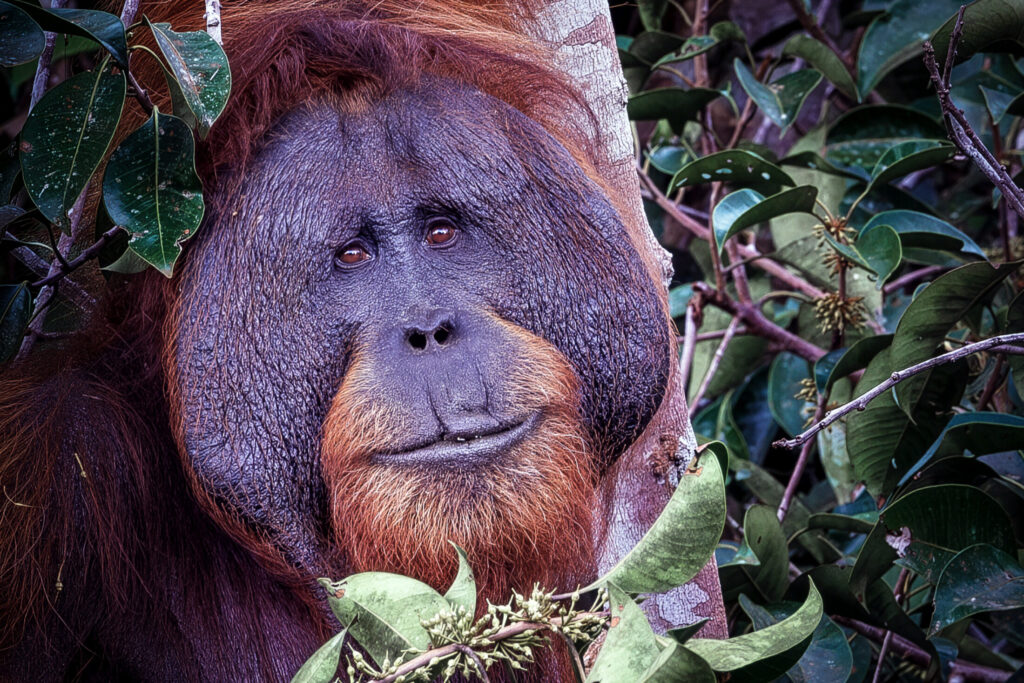
Fast Forward
Click. One day a little grandson of that primordial common mother raises his gaze toward the stars, begins to walk upright on two legs, discovers fire, language, weapons, understands that he can hunt, that he must hunt to survive. He begins to explore, invent, colonize increasingly vast areas, evolves, expands, evolves again, creates, invents more and more, better and better, and at the same time destroys, erases, then evolves again, and destroys more and more. He conquers every territory and every corner of the planet, stops before nothing, not even the fate of his own species.
This Primate, this “Evolved Ape”, begins to affirm itself and define the order of things (obviously from its one and only point of view) and, starting with Aristotle, who with his theory places “the Earth at the center of the Universe”, move to Plato, who introduces the idea of an “intelligible order and superiority of the world of ideas”, arriving (in an extreme synthesis) at the Middle Ages and Thomas Aquinas, who synthesizes everything into a vision in which Nature is directed toward Divine Design and Man is the privileged point of contact between matter and spirit.
“Finally”, with the Renaissance, we arrive at the concept of explicit Anthropocentrism, which finds one of its pillars in Giovanni Pico della Mirandola and his “Oration on the Dignity of Man” (year 1486), where the idea becomes explicit: man has no fixed nature, he is “placed at the center” to determine himself, he is the summit of natural creation.
God, assuming that one, or more than one, exists, has never officially ratified this theory, if I remember correctly. As in the common italian way-to-say, “we sing it and we play it”, for ourselves. As always.
But let us escape from the Renaissance, an age of Great Ideas and very bad hygiene, and return to present days, where by now “Man” has not only explored and colonized, but destroyed, from his own kind to nature, to the climate, permanently erased vast areas of the planet, thousands of animal and plant species, always following a single ideal: expansion and profit, always obeying to a single God: himself, and to his faithful right-hand, the money.
Welcome to the Anthropocene
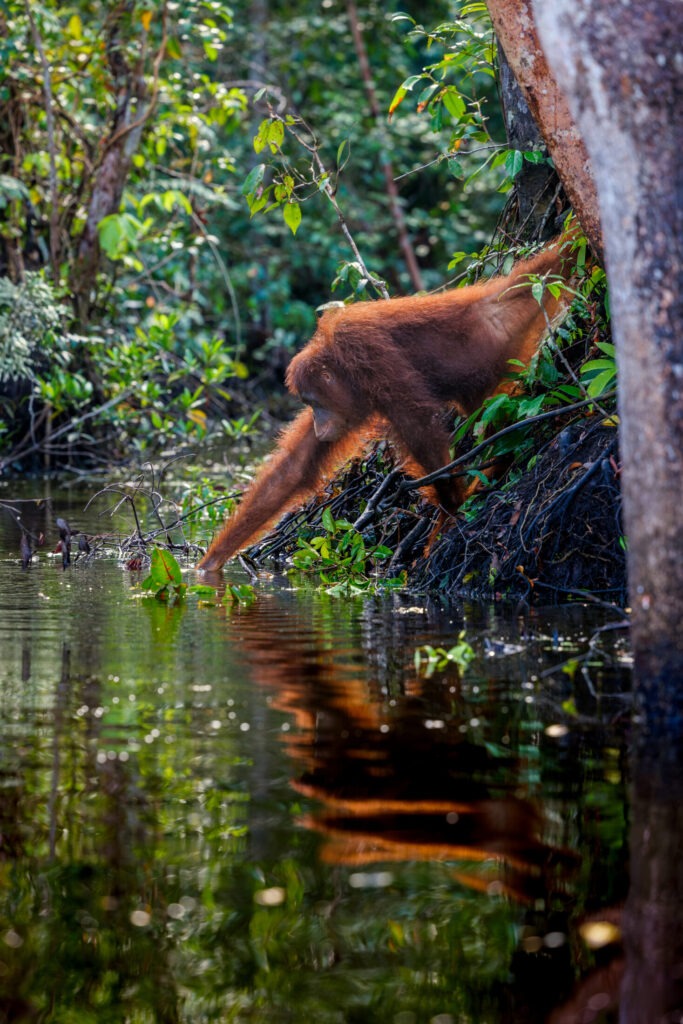
Then one day you find yourself in Borneo, one of the most remote and wild areas on the planet, a paradise besieged, disfigured and mutilated. You find yourself immersed and lost, admiring and observing the deafening silence of nature, made of endless sounds produced by creatures of every kind, by the dense vegetation responding to the touch of the wind, by the pouring rain that sometimes seems never to end.
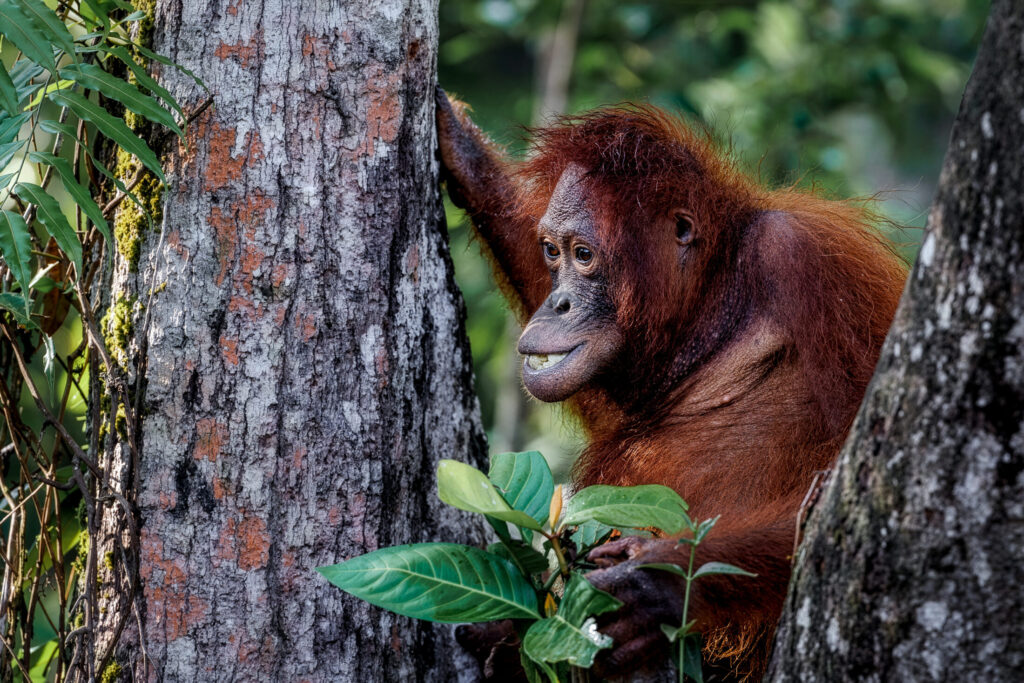
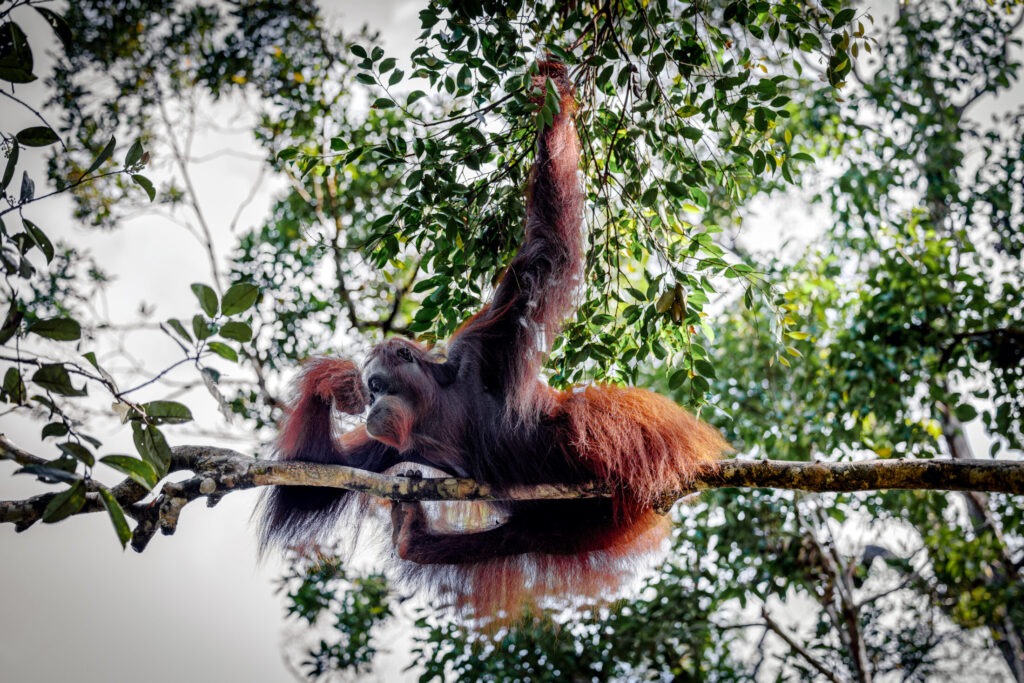
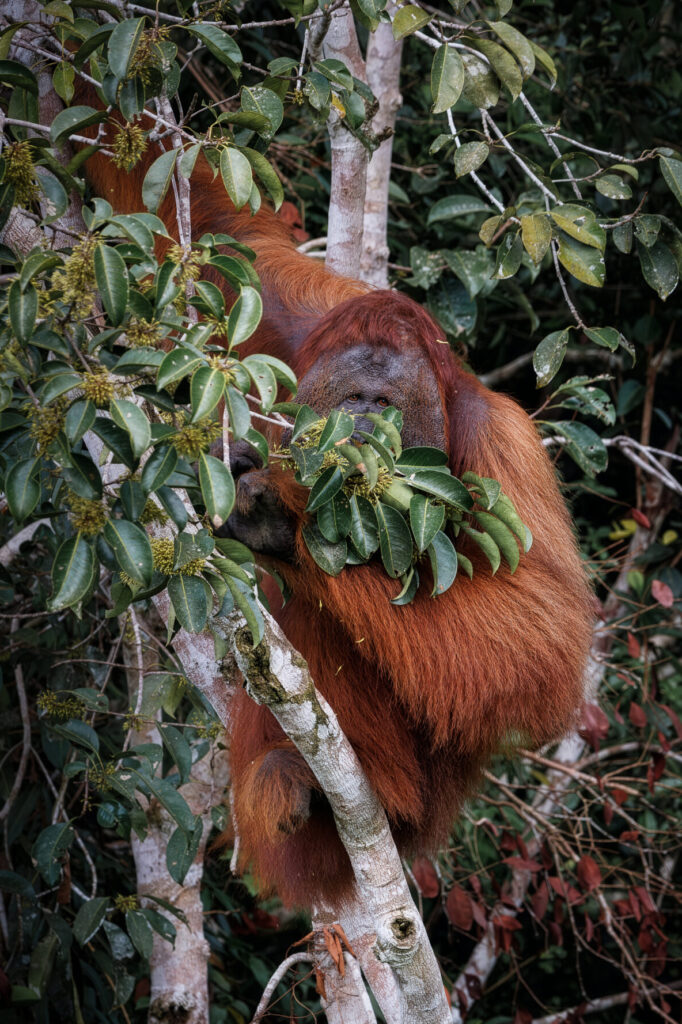
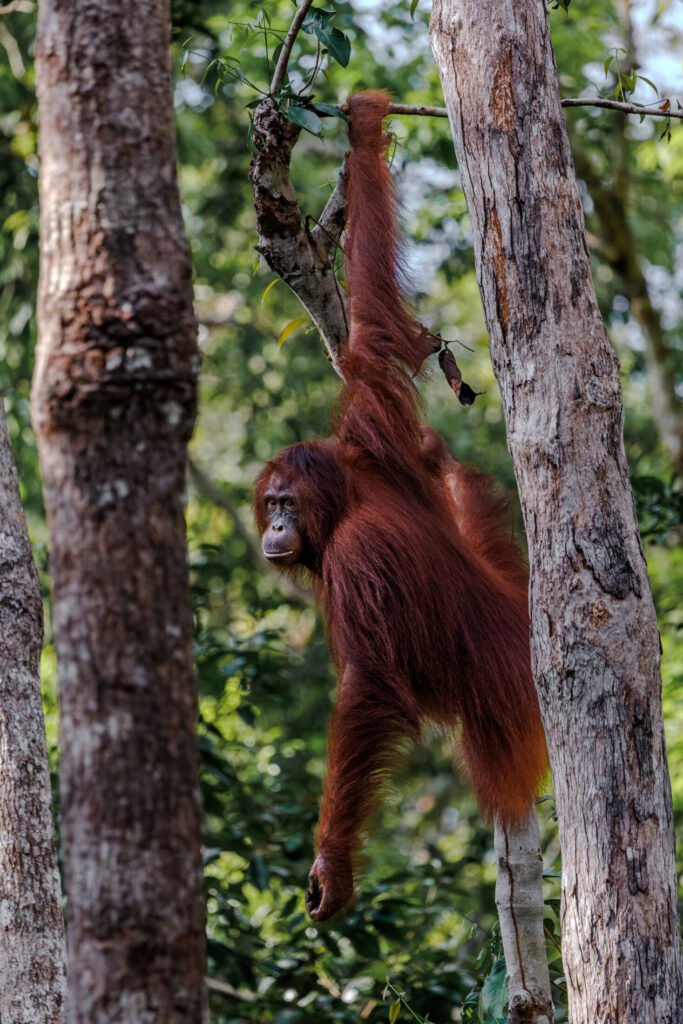
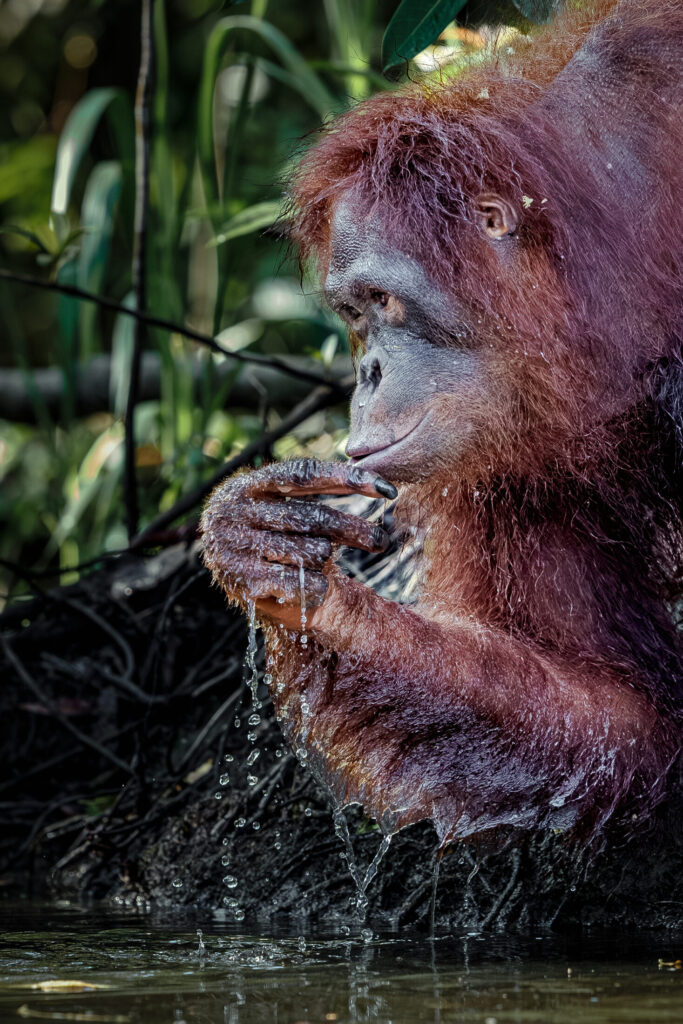
And it’s from the rain and among the rain, on a tree not far away, that suddenly you see him, an huge, majestic Orangutan, who, heavy yet agile, moves among trunks, branches and leaves. He eats, looks at you, observes you, continues doing his things, then looks at you again. He is beautiful, very big, he almost seems infinite, mighty and powerful with his reddish-orange fur and his very long arms. He seems like an invincible creature that’s instead incredibly fragile. Gundul is his name, the name the local people have given him. Gundul, the Lord of that small, immense slice of Paradise.
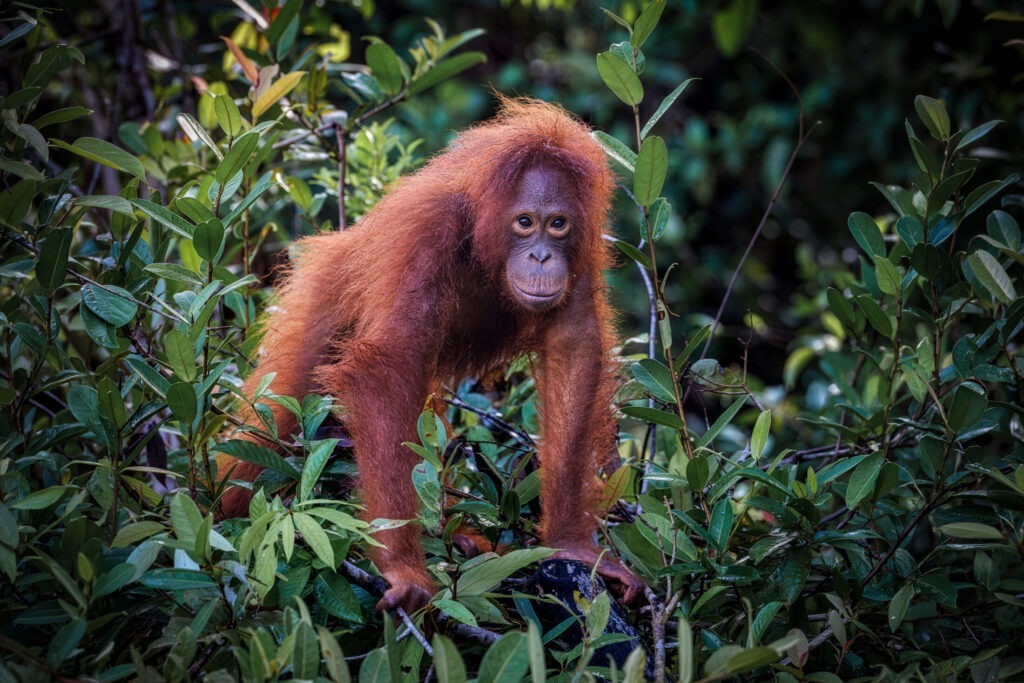
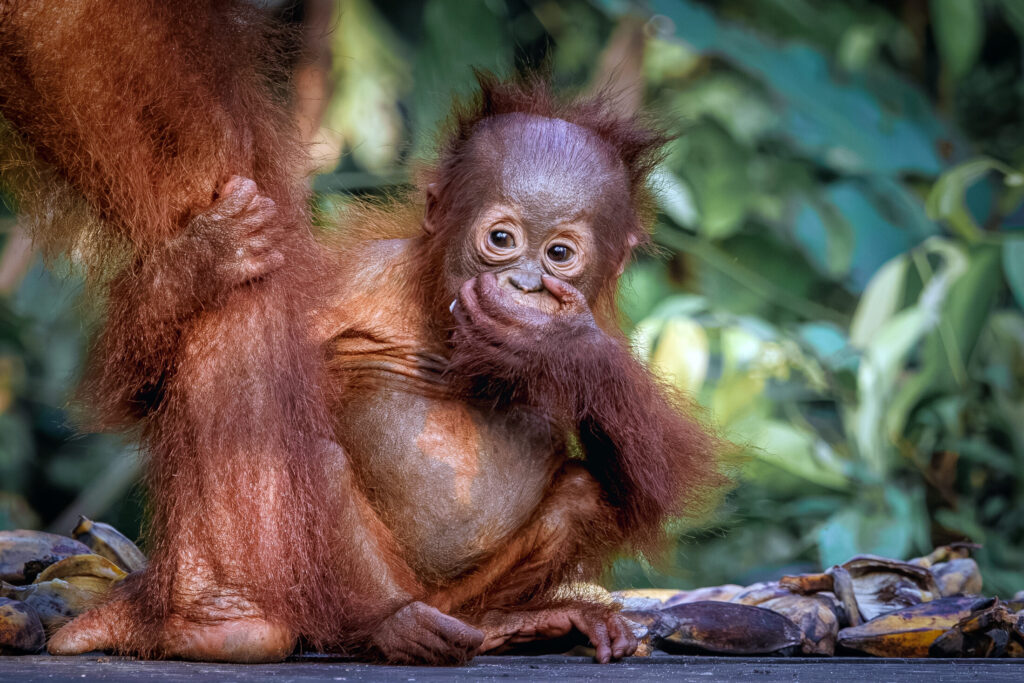
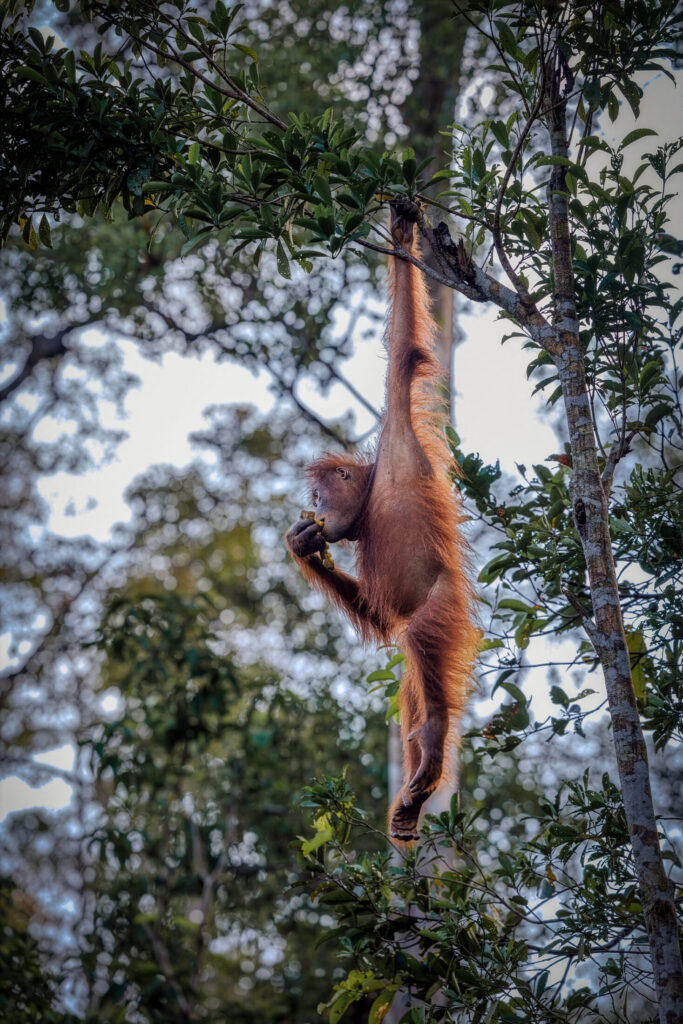
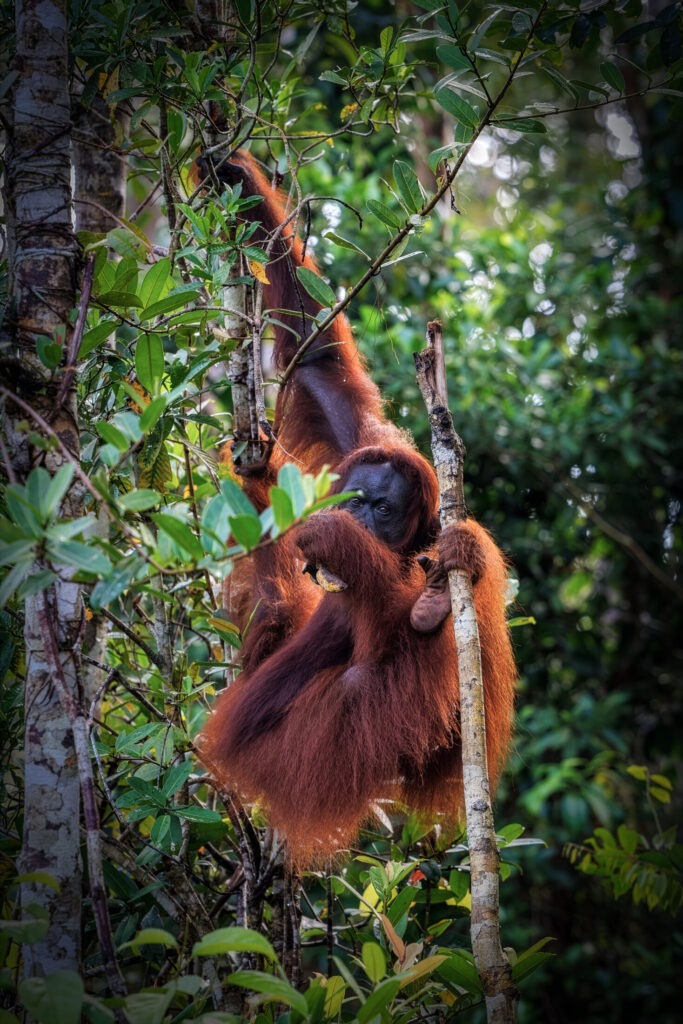
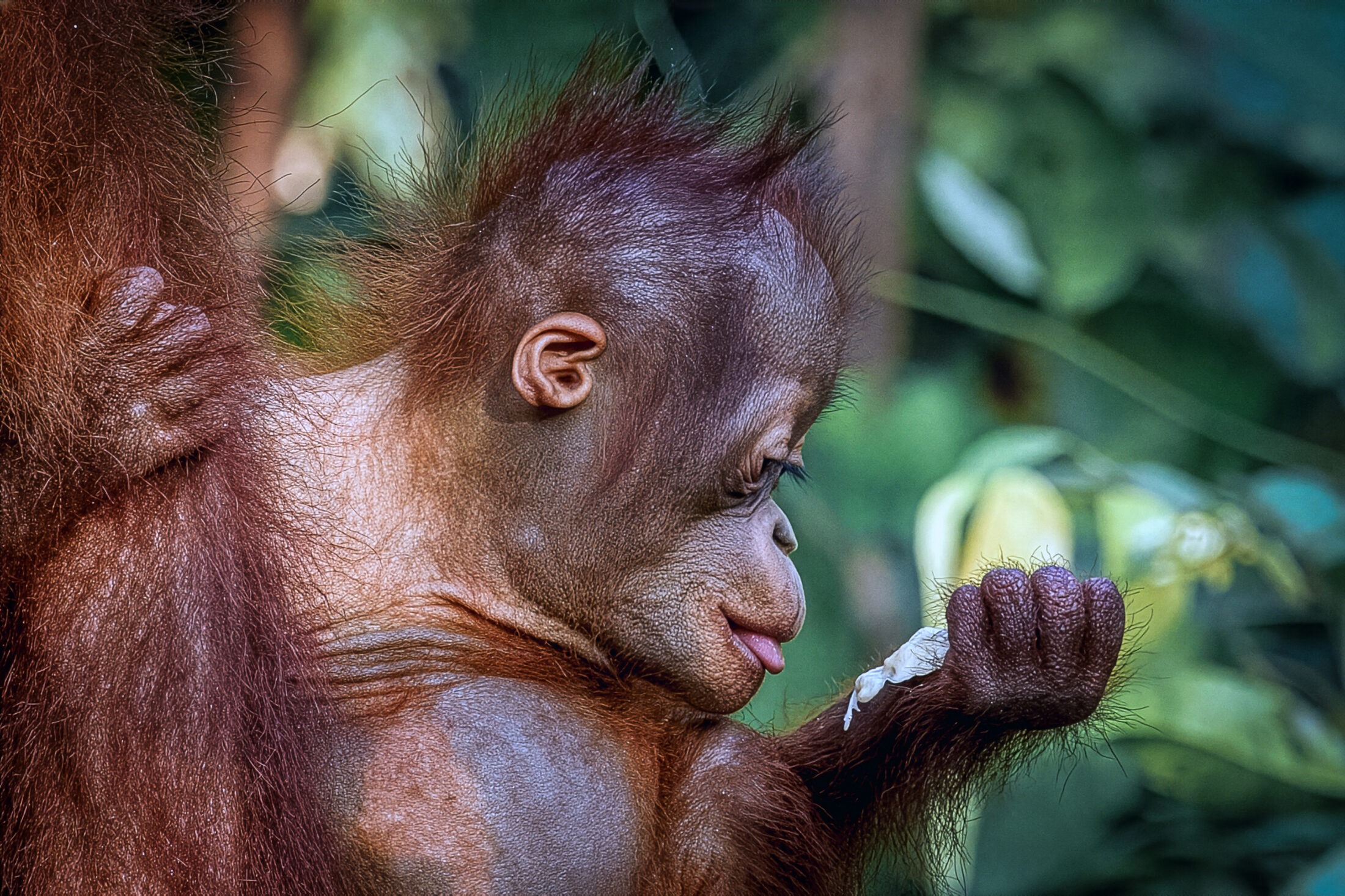
Every day, every encounter with a single Orangutan becomes special. I don’t know how many we met in a little less than a week. Dominant males, solitary females or females with newborn infants or with offspring following them (an Orangutan female gives birth every 6–7 years and the young remain with her until even 8–9 years of age), tiny Orangutans only a few months old looking at you with curiosity.
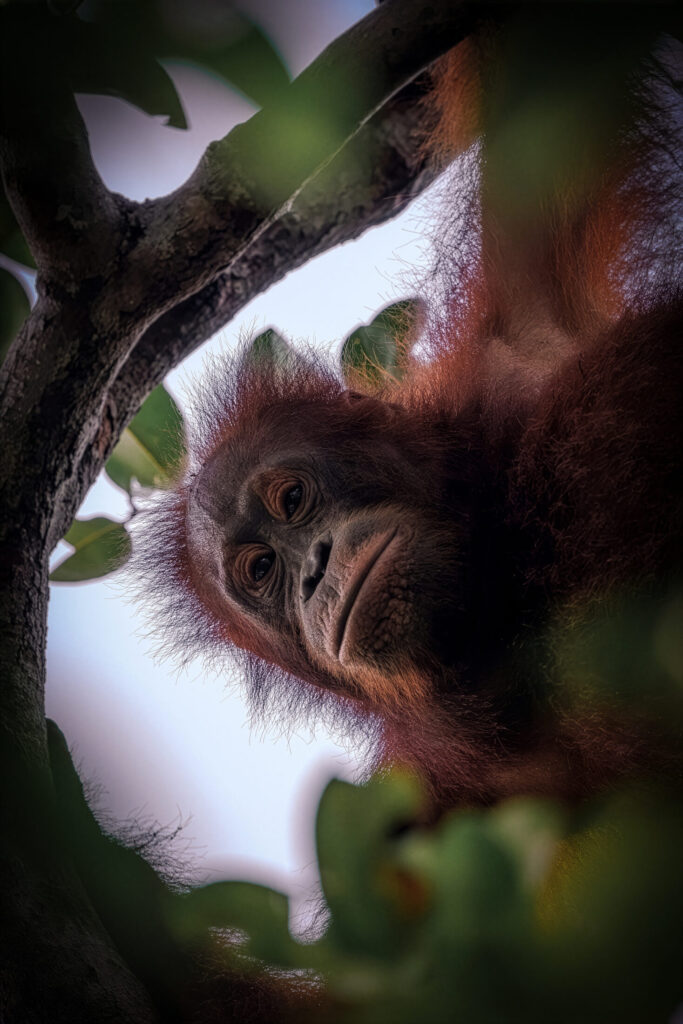
They are shy and reserved animals; females and younger individuals in particular cannot hold a human gaze. If you look them in the eyes, they leave, with a mixture of fear and instinct. They are elegantly funny in the way they move, with endless arms and legs that allow them not only to “fly” among the trees, but also to assume poses and attitudes that are a mixture of gym poses, theatrical performance and Mannerist sculpture, sometimes crossing into the comic and almost grotesque.
All of this “together”, the shyness hidden behind strength and instinct, their facial expressions, movements, poses and posture, that shy yet at the same time proud, curious and penetrating gaze, immediately leads you to love them, unconditionally, and to “feel” them, with a sensation that cannot be explained, “close”.
No, it’s not only the name, which in the local languages literally means “Man of the Forest” (Orang = man and Hutan = forest), it’s not only the 96.4% of shared DNA (note: although they aren’t the Primates with whom we share the highest percentage of DNA, a record held by Chimpanzees and Bonobos with 98.8%, followed by Gorillas with 98.4%), there’s something more.
Now imagine being in a place where millions of generations of your ancestors have succeeded one another, together with the inexorable passing of time, for millions and millions of years, in a perfect balance that only nature can create and manage. Imagine being one of the creatures that has watched over that forest forever and ever, with no predators, no enemies, no fear.
Then one ordinary day, while you are looking for some bananas or cleaning a little twig to try to pull some termites or ants out of a trunk, a bald, hairless creature arrives wearing a mango-yellow helmet on his head, he’s sweaty, smelly, with a belly bigger than yours, puffing and panting while making strange marks on the ground. You look at him curiously. You don’t know whether to come down and beat him because he’s in your territory, but then you choose to eat a banana and stay up in your tree. And it’s precisely at that instant that you hear a terrifying, continuous noise penetrating deep into the heart of the forest. You cover your ears and flee into the depths of the Jungle.
That instant will change everything. You don’t know it, but humans call them bulldozers, mines, chainsaws, and your home will never be the same again.
The only animal capable of destroying in fifty years something that has stood there, unchanged, for tens of millions of years, it’s Homo Sapiens. Welcome to the Anthropocene, my friend.
A Billion Tears Away
The entire area of Borneo has a surface area of approximately 743.330 square kilometres (it’s the third largest island in the world, about two and a half times the size of Italy). The 73% of Borneo, the Kalimantan region, belongs to Indonesia, while the rest is divided between Malaysia and the tiny Sultanate of Brunei.
From the 1970s to today, the island has undergone one of the fastest and most aggressive rates of deforestation in human history: a total of 180.000 square kilometres of primary forest (therefore 140 million years old) were destroyed between 1973 and 2015 (the scariest part are the datas, more than ten years out of date, and that is truly frightening). It means that the island has lost more than 30–35% of its original forest. Primordial forest. Forest that existed before the Dinosaurs. Forest that survived at least three mass extinctions. It resisted everything, indifferent, proud, resilient, indestructible. Then we arrived. The Apes with the iPhone.
But for you, 180.000 square kilometres means nothing, it’s just a number. I will translate it into comparative terms, so that it becomes clearer: 180.000 square kilometres are like simultaneously razing to the ground Piedmont, Lombardy, Veneto, Emilia-Romagna, Tuscany, Lazio, Campania and Sicily. 60% of the entire surface of Italy. More than Greece and Switzerland combined. Twice the entire surface area of Portugal. Like flattening Missouri or Oklahoma in the United States. Like all of Cambodia, Syria or Uruguay.
And if it’s still not clear, I will convert it into something more familiar to you, so may you can understand: In 42 years (1973–2015), approximately 25 million “football fields” of rainforest were erased (TWENTYFIVE MILLIONS). 600.000 football fields per year. 1.640 football fields per day. It’s as if, for 42 consecutive years, day and night, more than one football field per minute had been destroyed (about 1.1 per minute). And we allow ourselves to classify and define certain species as “invasive”? WE ARE “the Parable of the Vegan Wolf”, telling everyone that it was not him who ate the chickens because he has barely become vegan.
In all of this, the share of deforestation caused by Oil Palm amounts to approximately 91.000 square kilometres, with satellite analyses conducted by the Center for International Forestry Research (CIFOR) confirming that 77% of plantations stand on land that in 1973 was untouched Jungle. In recent years (particularly from 2018 onward), thanks to Indonesian governmental moratoriums, stricter laws and international pressure on consumer brands regarding the use of certified “deforestation-free” oil, the rate of oil-palm-driven deforestation in Borneo has slowed, but scars such as those in Kalimantan remain gigantic and visible even from space.
The 180.000 have become an estimated (or underestimated) 200.000. A small note: Oil Palms bears no blame in all this, it’s only a plant. Its only “fault” is growing at an average rate approximately four times higher than other cultivated vegetation. The guilty party is always him, the usual “Vegan Wolf”.
The immense “Green Desert” of palms alone has fragmented the habitat of large mammals, and thus, in the last twenty years alone, the expansion of plantations has caused the death of approximately 150.000 Bornean Orangutans, pushing the species to facing extinction. But there is more. To make room for plantations in Kalimantan, immense Peat Swamps were drained and burned. The fire used to clear the land released billions of tonnes of CO₂ into the atmosphere, transforming Indonesia into one of the largest emitters of greenhouse gases in the world.
This is what we are doing to Orangutans and to all the other lifeforms in the forest, always convinced that we are right, always certain that we stand on the right side of history, always convinced that we have priority and that the survival of our species can be separated from that of the others. With our grin always firmly stamped on our faces, we violate their land, destroy their forest, appropriate their home, day after day. Until when?
But the Times They Are A-Changin’?
I slightly narrow my eyes, just enough to fall into a sleep that is only apparently light. Fatigue, heat and humidity take over. I’m about to surrender definitively to sleep, but I hear myself being called. I do not understand, I’m confused, I try to bring my gaze into focus, I begin to glimpse something, it seems like him, although everything seems a bit absurd. I’m on a Klotok, how is it possible that there is an Orangutan in front of me?
But before I can say or do anything, he extends half a mango to me and… “Dear human, I’m not like you, I’m not you, but we share a lot, more than you can imagine. My story comes from very, very far away, almost lost in time. If you want to sit here with me for a while and listen, when you have cut down the last tree and I won’t be here anymore, you can tell my story to your little men, so that at least the memory of me survives, through time”.
A little dazed, I sit in front of him and listen: “You know, once upon a time there were many of us here, hundreds of thousands, perhaps millions. There were many enormous mango trees, we were in harmony with everything around us… have you ever heard of my ancestors?” I struggle to process it. I would like to answer like a good student, saying that I know the story of the “Lost Giant”, the Gigantopithecus (the largest Primate ever existed), but just as I’m about to pronounce the first syllable, a noise distracts me. I wake up, this time for real, with a strange sensation on me. I was dreaming, a dream so real it seemed true, yet still a dream. I prepare my equipment and set off together with the others guys for the last trek in the Jungle.
After more than three hours, several kilometres, after sweating like oven-roasted turkeys, we are close to returning. While I walk, last in the group, I see him observing me from a not particularly high branch. He seems like him, the one who spoke to me in the dream, but it cannot be, “it cannot be”, I repeat to myself. There is no time, but I slow down almost to a stop. Our gazes meet. I would like to say something, but not even a sound comes out. I would like to tell him not to worry, that things will change, that all this destruction and death will be stopped, that he will not disappear and will not be forgotten, but I cannot.
From the depth of his eyes I feel myself being pulled into a wormhole sixteen million years deep. At the bottom I see the reflection of myself, where I come from, what I was, what I will return to being, maybe what I would like to be.
As, like in a slow-motion scene from a Hollywood B-movie, we drift apart, I can barely raise a hand, a reverent gesture of farewell and a shy smile, to break the bittersweet agony of that Paradise. He seems to look at me as if to reassure me, “it’s not your fault”, his eyes seem to say, while his head lowers and rises in an almost imperceptible sign of assent and approval. A tear runs down my face. It’s time to go.
Freely inspired by ugly reality and a dream (or maybe it wasn’t?).
Sources: Wikipedia, Orangutans Foundation, Center for International Forestry Research (CIFOR).
Thanks to the guys from Natura Ethica Expeditions, Cristiano and Edoardo, to Moncos, the Best Guide in all Kalimantan, to the whole amazing Crew who took care of us, thanks to all my fellow expedition mates. Obviously thanks to all the insects that bit us in hundres and to all the animals that allowed themselves to be admired, and above all infinitely thanks to the Jungle.
Copyright Marco Redaelli 2026 – Reproduction in whole or in part permitted with Credits.
2 Comments
Leave a comment Cancel reply
You must be logged in to post a message.
Reading your articles is a pure joy for me. This one is so profound, expressive and cinematic. I could almost see a documentary film in my mind with you as a storyteller, with both dark and light chapters, with travelling through history, time and space. And your photos are masterpieces. Just wow. You have a great talent for capturing amazing moments. And some luck, of course – I guess it is always required in wildlife photography.
P.S. I wish your dream was longer, I was so curious about your dialogue.
Thank you so much, Anna. I’m glad you appreciated it. I always try to blend history, science, and humor in my stories. This Story is especially important to me. Thanks also for the compliments; it’s always important to receive confirmation and encouragement. In wildlife photography, luck (or timing, as some would call it) and patience are key. You have to be “there” and hope that nature decides to “cooperate” that day.