
The Curse of the Uncatchable Whale
The Curse of the Uncatchable Whale

9.45
It’s 9:45 AM on December 7th, 2024, Pacific Time, the “Curse” has finally been broken.
But let’s go back a bit. Costa Mesa, Newport Beach, Los Angeles. The morning starts early, around 7:00, not very early fortunately, because the Whales, unlike the inhabitants of the Bush and many other animals, are not such morning friends. We start with coffee, checking the equipment, batteries, SD Cards, settings and adding various superstitious rituals. The sky is blue, there are no clouds, there is no fog, there is not even wind, the temperature is around 10 degrees and, considering that at sea it can drop by 10/20 degrees compared to the mainland, it convinces me to wear a double sweater.
Richard, my driver for today, arrives on time. I get in the car, and in the most classic of American mainstream songs the notes of “Rocky Mountain High”. We talk about the day, what I expect, the ideal time to intercept the Whales that come down from the north towards the “Baja” in search of warmer waters, and where to take photos of Hummingbirds in that area. I realized only later that we are simultaneously talking about the largest animals on the planet and some of the smallest. It doesn’t mean anything, but it makes me smile.
Richard drops me off at the dock wishing me the best, I say goodbye, and as any good Italian I mentally make all the possible spells. After checking in I wait for the arrival of the dinghy boat that will take me out into the open Pacific Ocean. The Balboa Peninsula is a very pleasant vacation place, with restaurants, cafes, lots of souvenir shops (some of them really crazy) and a number of beautiful (and very expensive) houses that overlook the ocean or nearby Balboa Island.
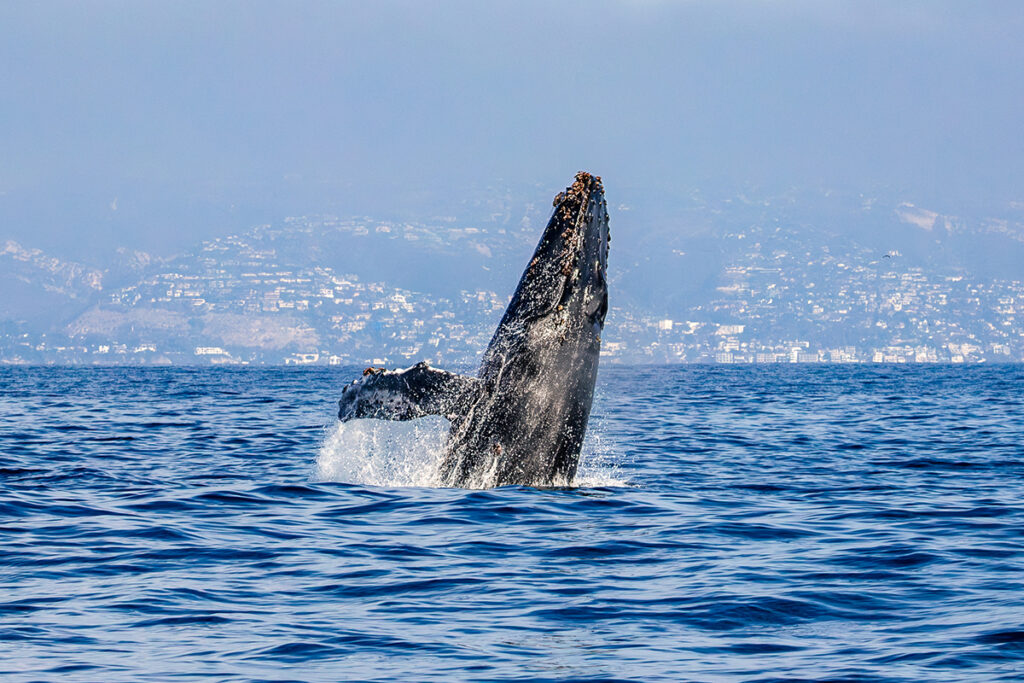
We leave on time with a guide Erika, and a Captain, Jenna, who should (in theory) take us “there”, where we meet our friends. We leave the Port after admiring dream houses that line the entire perimeter. We leave the harbor, under the severe eye of some Pelicans, and finally Erika tells us “Welcome to the open Pacific Ocean”.
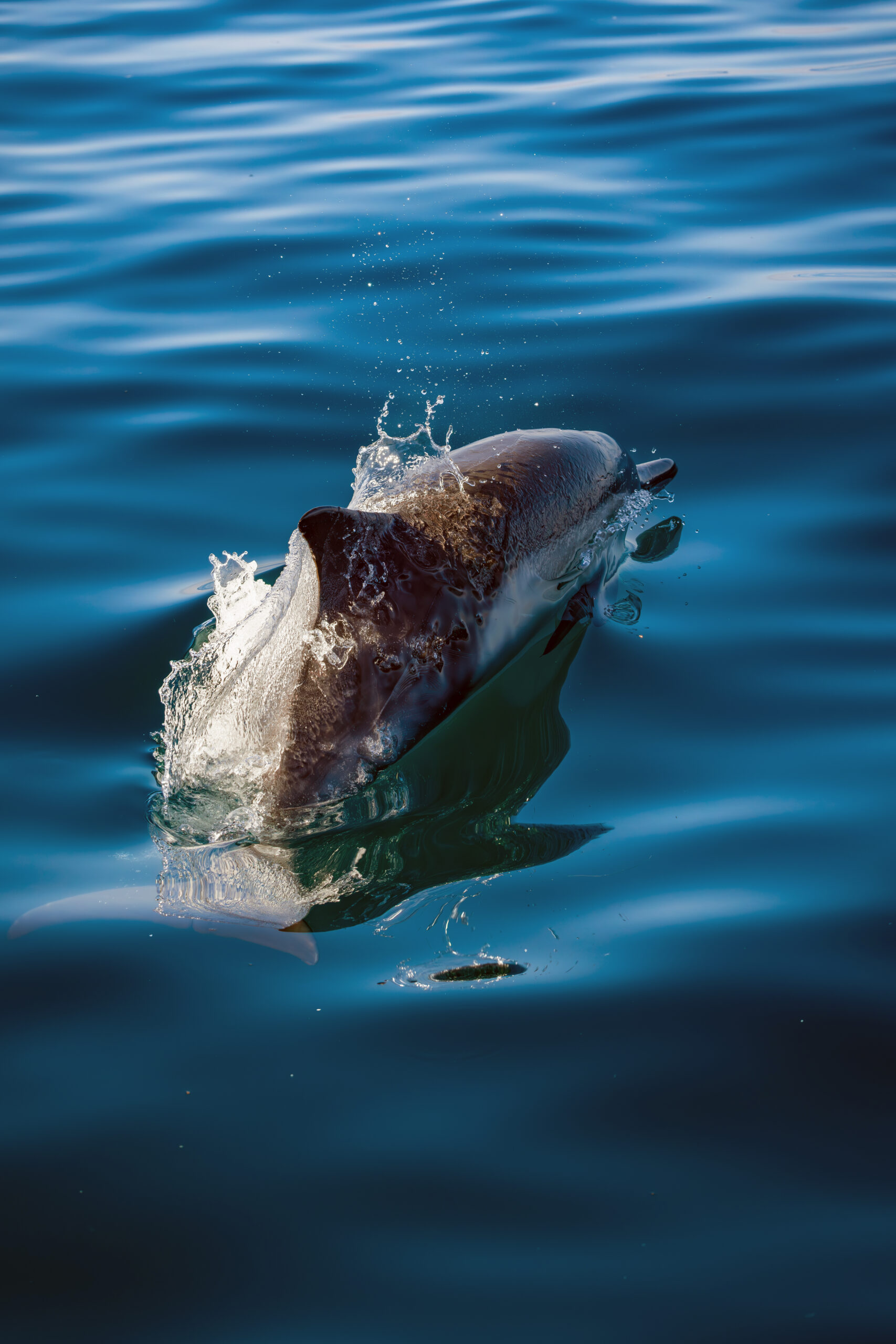
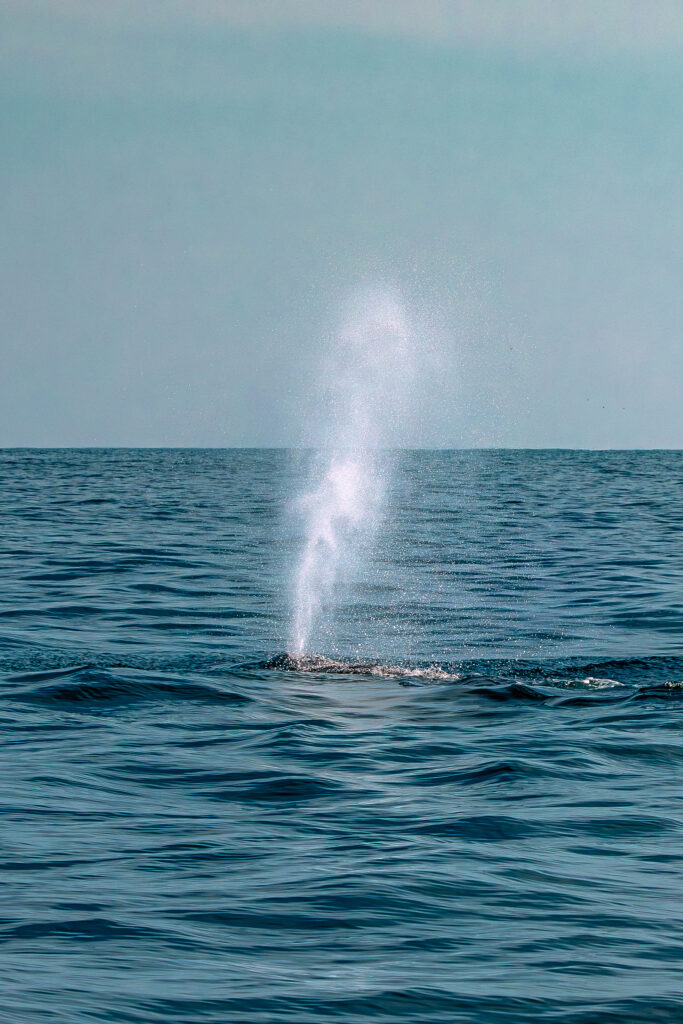
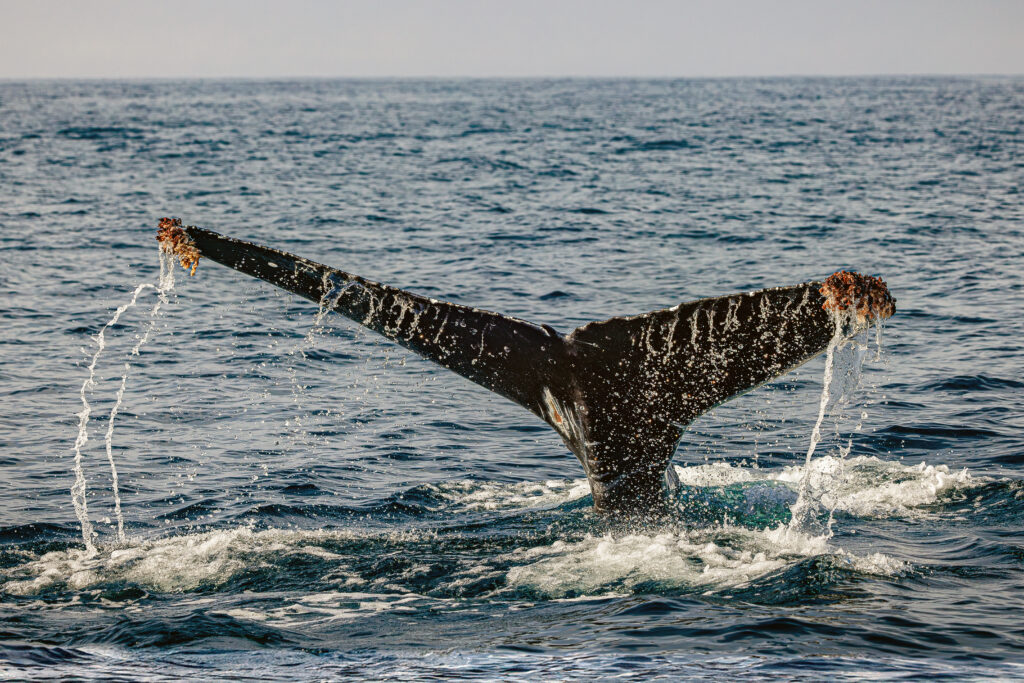
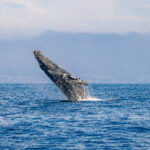
It’s indeed cold, the huge dinghy that ploughs at high speed through an extraordinarily calm sea (pacific in name and in fact, today). We descend along the coast towards San Diego (and in the direction of “Baja California”), until we see movement from afar. In a few dozen seconds we are there, and suddenly we are surrounded by Dolphins, who approach, move away, jump and watch us curiously. “Dolphins love to be near boats, in fact I would say they really love boats” Erika tells us. What incredibly beautiful animals Dolphins are. We don’t even have time to enjoy our travel companions when a Humpback Whale appears out of nowhere and makes a senseless leap a few dozen meters away from us. It’s the beginning of an extraordinary show and, for me, the end of my very personal “curse”.
Curses
Let’s take a step back. The first time I tried to organize a day of “Whale Watching” was in August 2017, we were in South Africa in the Cape region, I had just experienced, the day before, the great emotion of diving into the freezing winter waters of the Atlantic Ocean in the classic “Shark Cage”, to observe up close the Bosses of the area, the magnificent “Great White Sharks” and I wanted at all costs to also see the Whales, which are very numerous in the area that goes from Cape Town down to the Cape of Good Hope. From that day and for several days there was no longer any possibility of going out to sea due to bad weather (in August in South Africa it’s winter).
That was my first (failed) attempt to see up close the biggest creatures of the planet. That first episode was followed by a second failed attempt, again in South Africa, in Simon’s Town in 2022, again due to bad weather, preceded by the frustrating route, known as the “Whale Trail”, covered by car on the transfer from the Cape of Good Hope to Cape Aghulas, a route in which “usually” you can spot a lot of Whales both in the open sea and very, very close to the coast, even while driving. That day, neverending rain and a fog that would have made Stephen King’s “The Fog” pale, did not allow you to see practically anything beyond the coast itself.
This was followed by two more attempts, in 2023 in Hervey Bay, Australia, where for two of the three days of our stay there was such strong wind that everyone had to cancel all boat trips for safety reasons, obviously including ours (I don’t consider a true “whale-watching” when we saw in a distance a couple of Humpback Whales jumping out of the water, almost to make fun of me, while we were off-roading along the “Seventy-Five Miles Beach” on the island of K’Gari, also formerly known as Fraser Island”).
The last stop on my “ordeal” was in 2024, Swakopmund (Atlantic Ocean, Namibia), and again the only day of clouds and fog of the entire week was the one in which we could have gone out on the boat.
The Times They Are A-Changin’
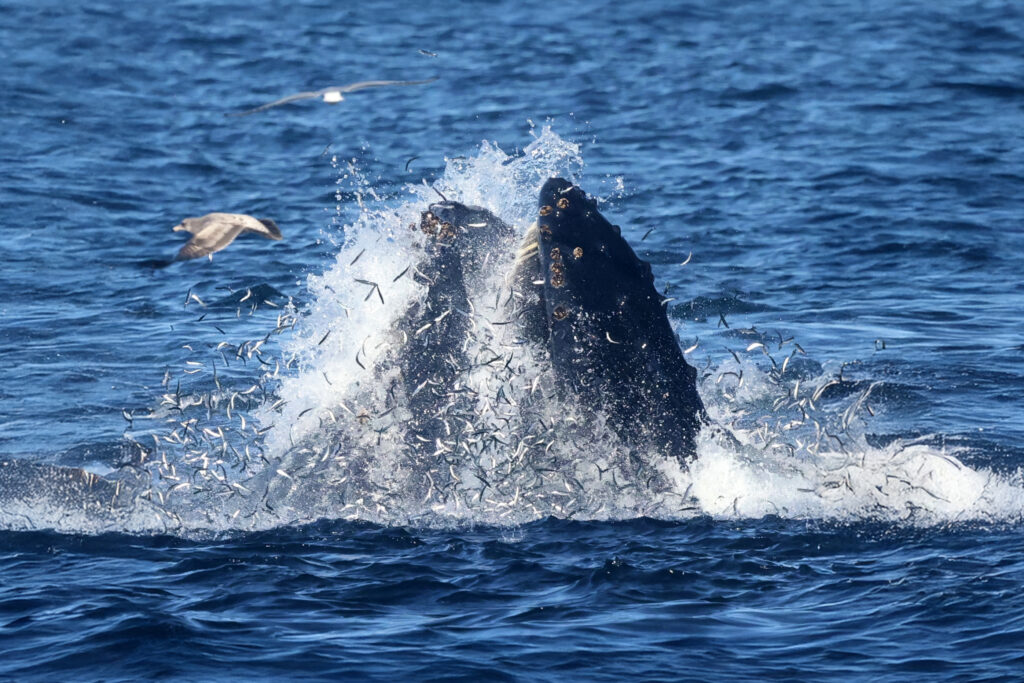
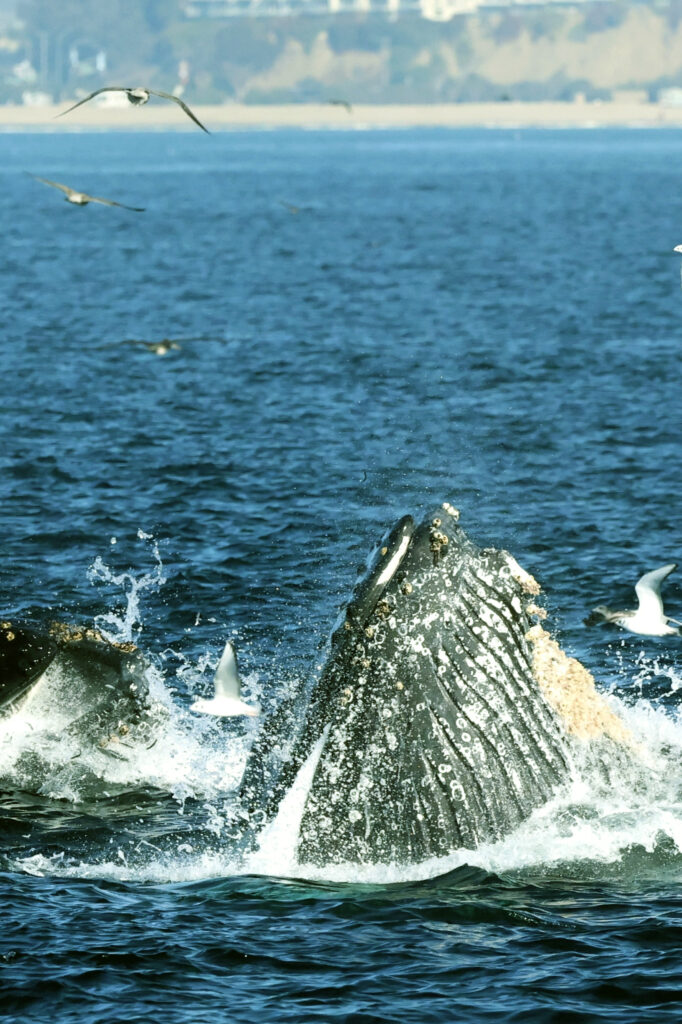
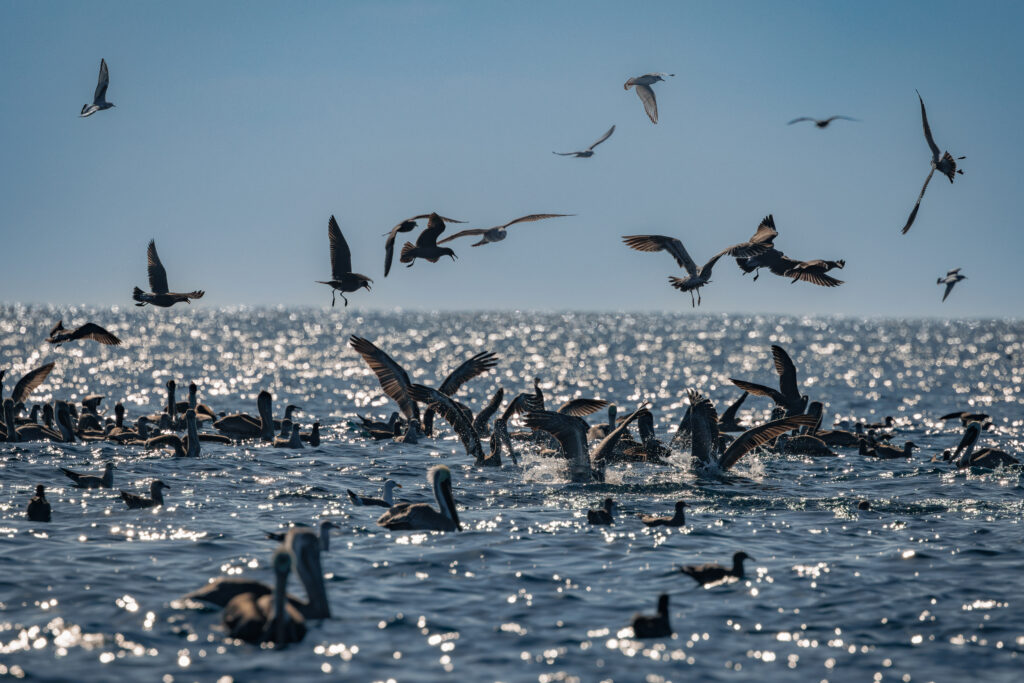
So you can imagine my amazement when on the morning of December 7th I saw the sun, no clouds and almost no wind from the window (Thanks, Sant’Ambrogio). But let’s go back to that first jump, which started an incredible morning in which I was able to admire an incredible amount of life up close. Shortly after this first jump and having followed/chased the Humpback Whale for a while, we saw in the distance, towards the coast, very close to the coast, an incredible amount of Sea Birds that are very busy diving into the water: it’s the signal that the “lunch feeding” has begun. A huge school of Sardines is in the wrong place at the wrong time.
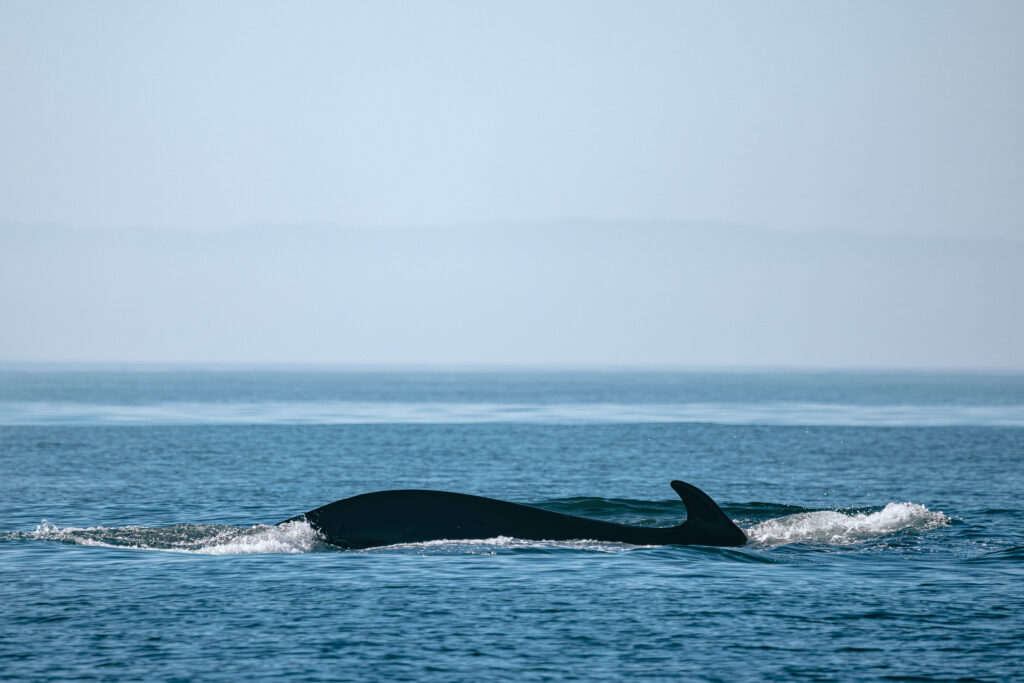
We get closer and we find ourselves in front of an incredible, cruel (as always in nature) but difficult to describe show: 5 Whales (three humpbacks and two “Fin Whales”), a few hundred Dolphins, in addition to the already mentioned thousands of Sea Birds, feast on the unfortunate anchovies, creating such a massacre and confusion that it puts the camera’s autofocus sensor in serious difficulty (not to say in total crisis).
It doesn’t last long, about fifteen minutes, just enough for the Whales and Dolphins to fill up on Anchovies and leave the survivors to the remaining birds. It was an incredible, exciting and one-of-a-kind spectacle, “not bad for a first outing,” I though to myself. It’s time to go back, Captain Jenna puts the dinghy at full speed that will take us back to Balboa dock, covering the 16 and more miles (about 26 kilometers) in just over 20 minutes.
But the surprises aren’t over. Just outside the port she receives the news on the radio that there could be two “Blue Whales” in the area (Blue Whales are the largest creatures ever to exist on our planet), but perhaps it’s asking too much to be able to see those too, and in fact the two “Blue Girls” have already left, but in their place two other “Fin Whales” (the second largest animal on the planet) arrive to greet us, diving and heading towards the open ocean.
On the way back to the port we also have the opportunity to meet an extended family of “Sea Lions” who, as a “great classic”, sleep, make noise and dive from the signal buoy at the entrance to the port. Sea Lions are funny creatures, they always have interesting expressions, as well as a “particularly” smell, difficult to manage. After a few shots we say goodbye to our “smelly” friends and return to the dock still with the emotion of what we have seen. Happy, because tomorrow morning we go out to sea again.
(To be Continued…)

2 Comments
Leave a comment Cancel reply
You must be logged in to post a message.
Ho letto la storia con curiosità e gioia. Sono molto felice che “la maledizione” sia stata spezzata e che tu abbia potuto goderti una bellissima sessione di whale watching. Le foto sono incredibili. La mia preferita è quella con il pranzo spietato.
Grazie Anna, mi fa piacere che la mia storia ti sia piaciuta.